The Housing Market Is Not One Market: June 2026 Proves It

Image: Real Estate Solver
June 2026 produced the perfect housing-market argument because almost everyone could find a national number to support the story they already believed.
The Census Bureau estimated new single-family home sales at a seasonally adjusted annual rate of 628,000, up 1.6% from May but down 5.6% from June 2025. The same release estimated 9.3 months of new-home supply and a median new-home sale price of $398,300. Several reported changes carried wide margins of error.
Meanwhile, a FRED series sourced from Realtor.com showed a June national median listing price of $430,000. That is not a contradiction. It is a different population and metric.
Four numbers that are not interchangeable
- New-home sale price: completed sales of newly built homes in the survey.
- Existing-home sale price: a different market and source.
- Listing price: what sellers ask, not necessarily what buyers pay.
- Automated estimate: a model output for a property, not a transaction.
National medians also change when the mix of homes sold changes. More smaller or lower-cost homes can pull a median down without every existing home losing the same percentage.
The local decision stack
For a specific property, move from broad to narrow:
- National financing and construction context.
- Metro and county supply, employment, and migration.
- Neighborhood closed sales and active competition.
- Property condition, lot, insurance, taxes, and restrictions.
- Seller deadline and buyer financing.
The final layer can overwhelm the first. A repaired house with flexible timing and a distressed property needing a fast close are not the same product even if they share a ZIP code.
Why forecasts age quickly
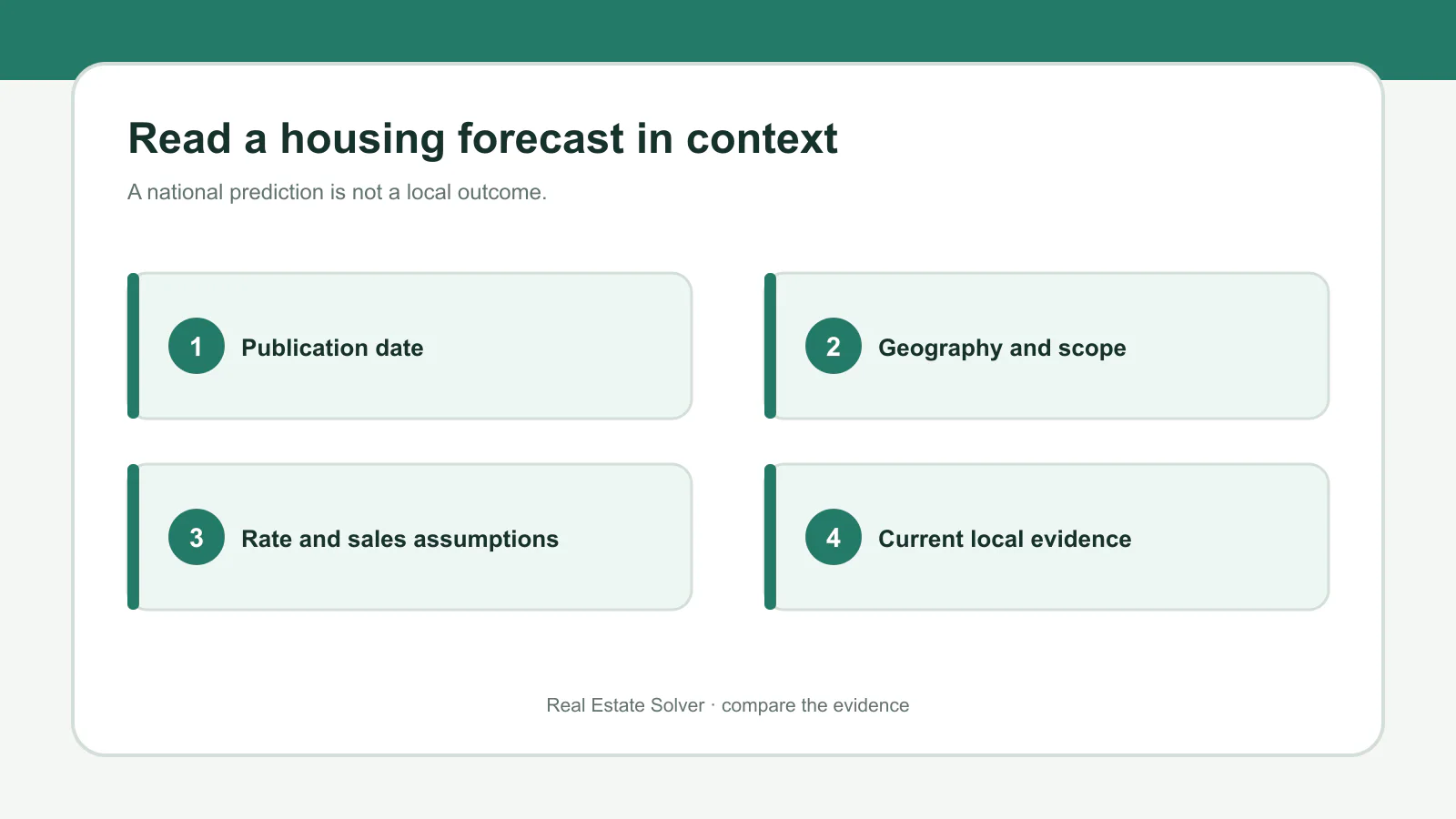
Housing is slow-moving, but mortgage rates, insurance, builder incentives, inventory, and local employment can change the transaction math before an annual forecast is revised. Timestamp every source and preserve the uncertainty range.
The Census release itself marks estimates where sampling error means a reported monthly or annual change is not statistically distinguishable from zero. A small directional headline can therefore carry much less certainty than it appears.
Sources and limits
The national figures do not value a particular property. FRED identifies the original private data source and methodology notes. This article is educational and is not real-estate, legal, or investment advice.
Key takeaway
There is no single housing-market number. Match the dataset to the decision, then narrow from national context to actual local transactions and the property’s condition and deadline.
housing marketnew home sales2026 datalocal market